Food safety games for employees & adult teams
Most food safety games online are built for eight-year-olds. This is a guide to games built for experienced food handlers, what works, why it works, and how to use it without turning training into a gimmick.
Why "games for kids" and "games for employees" aren't the same thing
A game aimed at children teaches basic hygiene concepts for the first time: wash your hands, don't touch raw chicken then lettuce. A game aimed at employees has to do something harder: get experienced staff to re-engage with rules they already technically know, surface the gaps between what people say they do and what they actually do under pressure, and connect straight back to your real hazards, your allergens, your critical control points and your last audit finding.
That's the difference between a worksheet and a training tool. Employee-facing food safety games work when they:
- Use real production scenarios, not generic trivia
- Are short enough to run in a 15–45 minute session, not a full classroom period
- Create discussion between people who don't normally talk shop: packers, cleaners, supervisors, QA
- Leave a paper trail (attendance, scores, topics covered) that supports your Certificate of Acceptability and audit evidence
10 food safety games and activities for employees
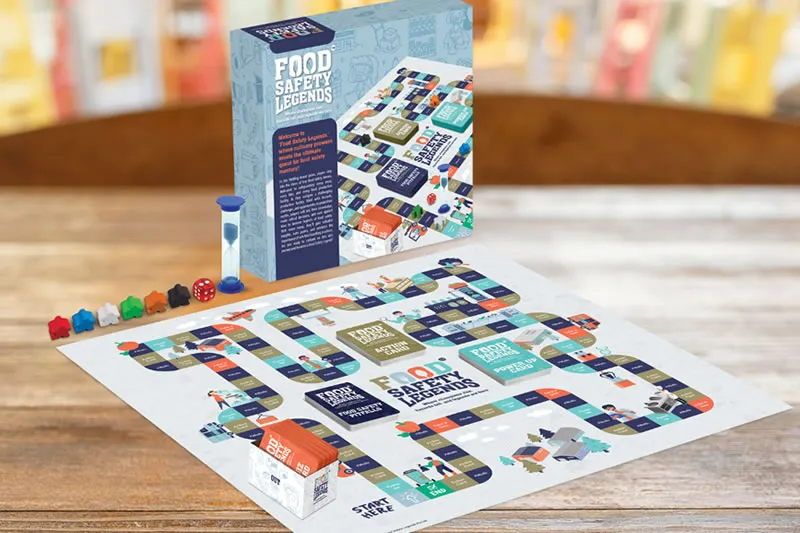
- Board game sessions (45–60 min). Teams move through real production scenarios (cross-contamination risks, allergen mix-ups, temperature abuse, pest sightings) and have to make the same calls a shift supervisor makes. This is the format Food Safety Legends is built around.
- Knockout quiz tournaments. Fast, competitive, works well at shift handover or a Quality Day event.
- Department vs department challenges. Packing vs. production vs. cleaning teams compete on hazard-spotting scenarios specific to their own area.
- Card-matching activities. Match hazards to controls, or symptoms to corrective actions, good for a 10-minute toolbox talk opener.
- Allergen relay races. Teams sort ingredients or product labels by allergen category against the clock.
- Toolbox-talk openers. A single scenario card read aloud at the start of a shift meeting, discussed for five minutes.
- Induction gamification. New starters play a shortened session in their first week instead of sitting through a slideshow alone.
- Refresher knowledge-check rounds. Used ahead of an internal or third-party audit to find knowledge gaps before the auditor does.
- Cross-functional culture sessions. Mixing shop floor staff with management in the same game deliberately levels the hierarchy, so junior staff will say what they would not say in a formal review.
- Seasonal events. World Food Safety Day (7 June) or an internal Food Safety Week built around a tournament format.
What makes these work for adults specifically
Adult learning theory is blunt about this: adults retain more when they solve a problem themselves than when they're told the answer. A game format forces a decision, "do I accept this batch or reject it?", rather than presenting a rule to memorise. That's why gamified refreshers consistently show better recall in post-training knowledge checks than lecture-only refreshers, particularly for staff who've sat through the same annual training multiple years running.
It also does something a slide deck can't: it puts a production supervisor, a QA manager, and a new packer at the same table making the same calls. That's where food safety culture actually gets built, not in the policy document, but in the conversation that happens when someone has to defend their answer to a colleague.
Important: games support training, they don't replace it
Under Regulation R638, food handlers need appropriate instruction and evidence of competency, and the designated Person in Charge needs accredited food safety training. A game, including this one, is not a substitute for that accredited training or for your Certificate of Acceptability requirements. Used well, it's a refresher, induction support, and engagement tool that sits alongside your accredited training programme, not instead of it. Keep your attendance records and topics-covered notes from every session; they're useful evidence of ongoing competency development between formal refresher courses.
How Food Safety Legends fits in
Food Safety Legends is a board game built around real production scenarios rather than generic trivia, designed to be played by food handlers, packers, cleaners, cashiers and their supervisors together. It's used for refreshers, inductions, toolbox talks, and pre-audit knowledge checks by South African food businesses working toward FSSC 22000, BRCGS, and R638 compliance.
See how it's played · More ways to play with your team · Order the game
Common questions
Are food safety games only for young or new employees?
No, the format works best with mixed-experience teams. Experienced staff often make the discussion sharper because they bring real examples from the floor.
Can a game count toward our food safety training records?
It can support your training programme and be logged as a refresher or engagement activity, but it doesn't replace accredited R638 training for your Person in Charge or the formal food handler training your business is required to provide.
How long does a food safety training game session take?
A full board game session runs 45–60 minutes. Shorter formats such as quiz rounds or toolbox-talk openers run 10–20 minutes.
What team sizes work best for food safety training games?
Most formats work for teams of 4–12 people per game; larger teams can run parallel sessions or department-vs-department tournaments.
Bring a food safety game to your team
Order Food Safety Legends and pick the format that suits your shift.