30 food safety toolbox talk topics your team can use today
Seven themes, 30 short topics, each with the key talking point and a question to ask. Run one a week, or one a shift.
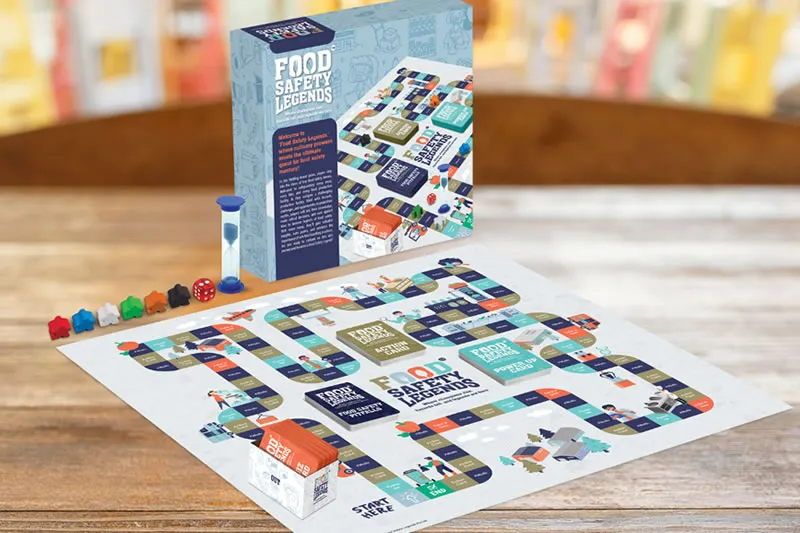
A food safety toolbox talk is a short, focused discussion, usually 5–10 minutes at the start of a shift, on one topic. The 30 topics below are grouped into seven themes (hygiene, cross-contamination, temperature, allergens, cleaning, pests and culture). Each has a talking point and a question that gets the team discussing rather than listening. Use them as written, or pair them with a Food Safety Legends card round to turn a talk into a 15-minute activity.
Personal hygiene toolbox talk topics
Short talks that tie everyday habits to the hazards they prevent.
1. Handwashing: when and how
Wash before handling food, after the toilet, after touching raw food, bins or your face. Scrub every surface of the hands with soap for at least 20 seconds, rinse and dry with a clean towel. Ask: which moments on this shift do we forget?
2. Reporting illness before work
Anyone with diarrhoea or vomiting reports it to the supervisor and stays away from food handling, as your policy requires. Ask: would a new starter know who to tell, and feel able to?
3. Cuts and wounds
Cover a cut with a waterproof, highly visible plaster (blue is standard in many kitchens) and a glove before handling food. Ask: where are the plasters kept, and who checks?
4. Protective clothing and equipment
Walk through the protective clothing your area requires, when it must be changed and where it is stored. Ask: what makes this hard to follow on a busy shift?
5. Hands you cannot see
Hands carry bacteria you cannot see. List everything touched between two handwashes, from raw food to bins to your face. Ask: where could we add a handwash?
Cross-contamination toolbox talk topics
Cross-contamination is bacteria moving from raw food to ready-to-eat food. These talks make the routes visible.
6. Raw and ready-to-eat: keep them apart
Raw food and ready-to-eat food must not share boards, knives, hands or surfaces unless equipment is properly cleaned. Ask: where on our line do they come closest?
7. Boards, knives and equipment
Cutting salad on a board just used for raw meat is a classic cross-contamination route. Use separate or properly cleaned equipment. Ask: which tools do we share?
8. Fridge storage order
Store raw meat covered and below ready-to-eat food so juices cannot drip onto food that will not be cooked again. Ask: is our fridge laid out this way right now?
9. Surfaces and cloths
Bacteria also move via hands and surfaces, not just boards and knives. Ask: how do we clean and replace cloths, and who decides when?
Temperature control toolbox talk topics
Temperature is where small habits make the biggest difference.
10. The temperature danger zone
Bacteria grow fastest between roughly 5°C and 60°C. The WHO Five Keys advise keeping cold food below 5°C and hot food above 60°C. Ask: where do our products spend time in between?
11. Thawing frozen chicken safely
Thaw in the fridge so the outside of the food never sits in the danger zone while the inside thaws. Ask: what do we do when we run out of thawing time?
12. Cooling hot food quickly
Cool food quickly through the danger zone, for example in shallow containers or by dividing large batches, then refrigerate. Ask: what is the quickest safe option in our kitchen?
13. Fridge and freezer checks
Broken thermometers and unchecked units are classic hazards. Ask: when were temperatures last checked, how is it recorded, and what do we do when a reading looks wrong?
14. The cold chain: what if it breaks?
Cold-chain failures are one of the hazards food teams meet on the floor. Ask: if a delivery arrives warm, or a unit fails overnight, what exactly do we do next?
Allergen toolbox talk topics
Allergens cause severe reactions, so a guess is never good enough.
15. Know your allergens
Peanuts are one of the most common causes of severe allergic reactions. Always know which allergens are in what you serve or pack. Ask: which allergens are in our top five products?
16. A customer says they have a nut allergy
Check ingredients and preparation with the person in charge before serving. Never pick the nuts off or say it is probably fine. Ask: who is our go-to person on each shift?
17. Hidden allergens
Allergens can be hidden in ingredients or transferred during preparation. Ask: where could an allergen get into a product that does not list it?
18. Spot the allergen
Put three product labels on the table and have teams find the allergens against the clock. It turns label-reading into a habit. Ask: which label surprised you?
Cleaning and sanitising toolbox talk topics
Cleaning only works when everyone knows the order and the standard.
19. Cleaning vs sanitising
Cleaning removes dirt and grease; sanitising reduces bacteria to safe levels. Clean first, then sanitise, so the sanitiser can work on a clean surface. Ask: do we always do both, in that order?
20. The cleaning schedule
Walk through who cleans what, and when, in your area. Ask: which task is most often missed, and why?
21. Chemicals: use and storage
Look at where cleaning chemicals are kept and whether the labels are readable. Ask: what would a new starter get wrong here?
22. Clean tools for clean jobs
Brushes, cloths and mops can spread what they are meant to remove. Ask: how do we know our cleaning tools are themselves clean?
Pest control toolbox talk topics
Pest signs are small and easy to ignore. These talks make reporting automatic.
23. Spotting pest signs
If you see a mouse dropping in the dry store, report it immediately so pest control and checks can be done. Food may be contaminated and the source must be found. Ask: what signs would you recognise?
24. Keeping pests out
Think about doors, waste, spillages and storage. Ask: where could a pest get in or find food in our area?
25. A pest sighting: what happens next?
Agree who gets told, what is done with nearby food and how the sighting is recorded. Ask: if you saw one now, who would you tell first?
Food safety culture toolbox talk topics
Culture is what people do when no one is watching. These talks build the habits behind the rules.
26. Near-misses: report them, do not hide them
A near-miss reported is a problem fixed before it hurts anyone. Ask: do people here feel safe reporting a mistake?
27. Speaking up, kindly
In a strong food safety culture, staff correct each other without being asked. Ask: how do we do that without it feeling like blame?
28. Supervisors lead by example
A strong food safety culture shows supervisors visibly following the same rules they enforce. Ask: which rule would we follow better if leaders were seen following it?
29. What do we do when no one is watching?
Audits check paperwork; culture decides what happens on the floor at 2am. Ask: which habits would hold up unobserved?
30. Whose job is food safety?
Food safety is everyone's job, led by the person in charge. Ask: what is one thing each role on this shift owns?
Turn a toolbox talk into a 15-minute team activity
A talk works. A talk followed by a decision works better, because people remember what they had to defend. Try this format with any topic above:
- Read the topic and talking point aloud (2 to 3 minutes).
- Draw three Pitfall cards from Food Safety Legends that match the theme and ask: has this happened here? What would we do?
- Let two teams pick the right Power-Up (the corrective action) for each Pitfall and explain their choice.
- Close with one action for this shift, and write down the topic and who attended.
Prefer to start without the board? Use the food safety quiz as a warm-up, or see more food safety training activities. For employee-specific formats, see food safety games for employees.
What to record after a toolbox talk
- Date, duration and topic
- Names (and signatures) of attendees
- Gaps noticed and the follow-up action agreed
Keep these with your formal training certificates. Toolbox talks support your training programme and are useful evidence of ongoing refreshers, but they do not replace accredited training for your Person in Charge. See Person in Charge training and training records for your Certificate of Acceptability.
Common questions
How long should a food safety toolbox talk be?
Usually 5 to 10 minutes at the start of a shift, on one topic. Add a card round or quiz question and it becomes a 15-minute activity.
How often should we run food safety toolbox talks?
Many food businesses run a short talk weekly at shift handover, with a longer team refresher monthly. The best rhythm is the one your team will actually keep.
Do toolbox talks count as food handler training?
They support your training programme and can be logged as a refresher activity, but they do not replace the accredited training required for your Person in Charge or the formal instruction food handlers need under R638.
What should a toolbox talk cover?
One topic, one key point and one question for the team. The 30 topics on this page cover hygiene, cross-contamination, temperature control, allergens, cleaning, pest control and food safety culture.
Make every toolbox talk a team activity
Order Food Safety Legends and turn a 5-minute talk into a 15-minute round your team remembers.