Glossary
Food safety terms explained: R638, HACCP, GFSI & more
Plain-English definitions of the food safety terms that come up most for South African food businesses, the regulatory terms first, then the international frameworks.
South African regulatory terms
- Regulation R638
- The South African regulation (Regulations Governing General Hygiene Requirements for Food Premises, the Transport of Food and Related Matters, 2018) that sets hygiene requirements for any business handling food for sale, including training requirements for food handlers and the Person in Charge.
- Certificate of Acceptability (COA)
- The legal operating authorisation issued by a municipal environmental health department, required before a food premises can legally trade. It's not optional certification, without it, a business cannot legally sell food.
- Person in Charge
- The individual R638 designates as responsible for a food premises' compliance, who must complete accredited food safety training specifically (beyond the general instruction required for other food handlers).
- Food handler
- Anyone who handles food intended for sale to the public, including production staff, packers, kitchen staff, and anyone handling unpackaged food at point of sale.
International frameworks and standards
- HACCP (Hazard Analysis and Critical Control Points)
- A globally recognised, preventative food safety approach built around identifying hazards and controlling them at specific points in a process, rather than only inspecting the finished product.
- Critical Control Point (CCP)
- A step in a food production process where a control can be applied to prevent, eliminate, or reduce a food safety hazard to an acceptable level, the specific points HACCP is built around monitoring.
- GFSI (Global Food Safety Initiative)
- A collaboration that benchmarks food safety certification schemes (including FSSC 22000 and BRCGS) against a common set of requirements, so a certification recognised by one retailer or market is more likely to be recognised by others.
- FSSC 22000
- A GFSI-benchmarked food safety certification scheme built on ISO 22000, widely used by food manufacturers, including a specific requirement for demonstrating food safety culture.
- BRCGS (Brand Reputation through Compliance Global Standards)
- Another GFSI-benchmarked certification scheme, historically strong in retail supply chains, covering food safety, quality, and site standards.
- Food safety culture
- What people in a food business actually do around food safety when they aren't being directly observed or checked, as distinct from what's documented in policy. See our full guide to building food safety culture.
Related reading
- Food Handler Training in South Africa: The Complete Guide
- Food safety courses & certificates in South Africa
- What is HACCP training?
- R638 Person in Charge training: what's required
- Food safety training that sticks
- Building a food safety culture
Sources: Regulation R638 of 2018 (Foodstuffs, Cosmetics and Disinfectants Act 54 of 1972); Global Food Safety Initiative (mygfsi.com).
Ready to turn food safety into something your team looks forward to?
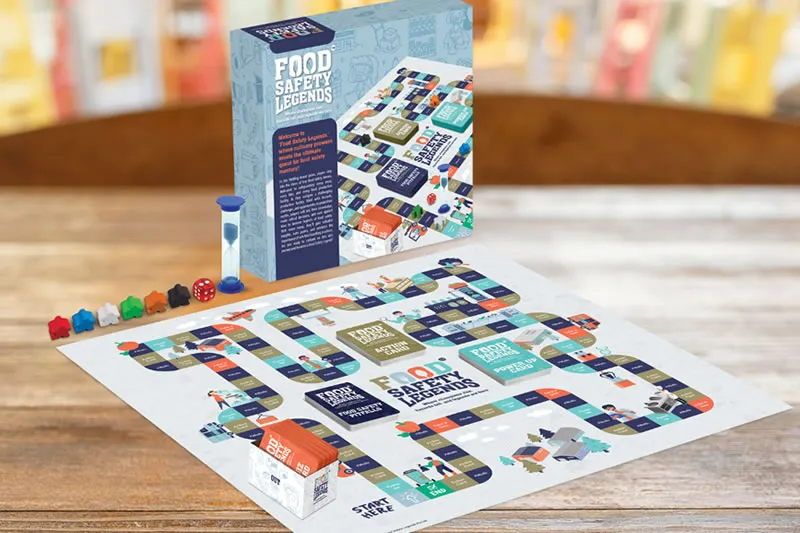
Order your Food Safety Legends board game, or ask us how it fits your training programme.