R638 Person in Charge training: what's required in South Africa
The Person in Charge carries the responsibility for food safety training on your premises. Here is what R638 expects, what to keep on file and how to keep the knowledge fresh between courses.
Under South Africa's R638 regulations, the Person in Charge of a food premises must complete accredited food safety training and make sure the food handlers working with them are trained too. This guide explains who that is, what the training involves, which records to keep, and how to keep the knowledge fresh between courses. Food Safety Legends is a refresher tool for that last part. It is not accredited training.
Who is the Person in Charge under R638?
R638, the Regulations Governing General Hygiene Requirements for Food Premises, the Transport of Food and Related Matters (2018), designates a Person in Charge as the individual responsible for the premises' compliance. They must be adequately trained in food safety and hygiene, and they must ensure that the food handlers working with them are trained as well.
This page is a practical summary, not legal advice. Check the regulation itself and your local environmental health practitioner for what applies to your premises. See our glossary entry for Person in Charge for the short definition.
What accredited training does the Person in Charge need?
The Person in Charge needs accredited food safety training specifically. That is a higher bar than the "appropriate instruction" required for other food handlers. In practice it means a course from an accredited provider, delivered in person or through accredited e-learning, that issues a certificate.
Our guide to the food handlers certificate and food safety courses explains how a certificate differs from a Certificate of Acceptability, and what to check before you book a provider.
What Person in Charge training covers
Course content varies by provider and level, so always check the course outline. In general, expect:
- The food safety and hygiene fundamentals: personal hygiene, cross-contamination, cleaning and sanitisation, temperature control, allergens and pest control
- The regulatory obligations of running a compliant food premises
- Your responsibility for making sure food handlers are trained and able to show it
If your business also needs HACCP specifically (for example for a retailer or a certification scheme), that is a separate course. See HACCP training.
Person in Charge vs food handler: what each needs
| Person in Charge | Food handlers | |
|---|---|---|
| Training required | Accredited food safety training | Appropriate instruction for their work |
| Evidence | Certificate from an accredited provider | Evidence of competency an inspector can review (a certificate or a dated training record) |
| Extra duty | Make sure food handlers are trained | Apply the training on the floor |
| Refresher schedule | R638 sets no fixed interval; keep competency current and documented | Same: ongoing, demonstrable competency |
The detail on handlers is in our food handler training guide.
Records the Person in Charge should keep
- Your own formal food safety training certificate
- A food handler training certificate or dated record for every handler
- An induction record for new starters (date, topics, supervisor)
- Refresher sessions: date, duration and format, who attended (names and signatures), topics covered, gaps noticed and the follow-up agreed
See training records for your Certificate of Acceptability for a checklist, and R638 training for what to log after each refresher.
Keeping Person in Charge knowledge fresh between courses
An accredited course is a point-in-time event. What keeps the knowledge live on the floor is short, regular reinforcement that you can also record:
- Weekly or per-shift: a short talk from our food safety toolbox talk topics
- Before an inspection or audit: a team knowledge check such as the food safety quiz, or a self-check using the food safety assessment guide
- Monthly: a 30–60 minute team session that brings every role into the same conversation
- After any incident or audit finding: targeted retraining on the topic that failed
Where Food Safety Legends fits
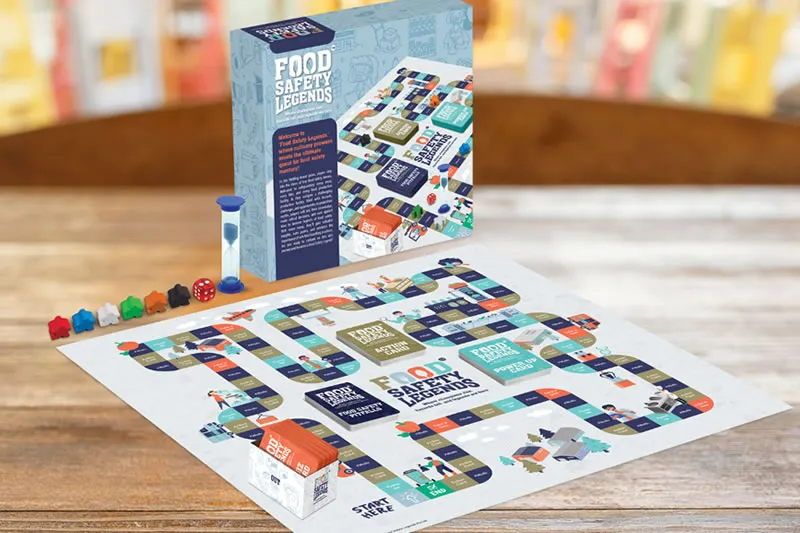
Food Safety Legends is a board game built around real production scenarios. It is not accredited training and does not issue certificates, so it cannot replace the Person in Charge's accredited course. What it does is keep that training from fading: a 30–60 minute session covers hygiene, cross-contamination, allergens and temperature control, and gives you a natural record of an ongoing refresher. See how it is played or order the game.
Common questions
Who is the Person in Charge under R638?
The individual designated as responsible for a food premises' compliance with R638. They must be adequately trained in food safety and hygiene and must make sure food handlers are trained.
Does the Person in Charge need accredited training?
Yes. R638 requires the designated Person in Charge to complete accredited food safety training, which is a higher requirement than the appropriate instruction required for other food handlers.
Do food handlers need the same accredited course?
Food handlers need appropriate instruction with evidence of competency an inspector can review. The accredited training requirement applies specifically to the Person in Charge.
How often does Person in Charge training need to be renewed?
R638 does not prescribe a fixed refresher schedule; it expects ongoing, demonstrable competency. Follow your auditor, customer or inspector requirements, and record the refreshers you run between formal courses.
Does Food Safety Legends count as Person in Charge training?
No. It is not accredited and does not issue certificates. Use it to reinforce and refresh the accredited training the Person in Charge has already completed.
Keep your Person in Charge training current
Order Food Safety Legends for refresher sessions between accredited courses.