Food handlers certificate and food safety courses in South Africa
What a food safety certificate actually covers, how it differs from a Certificate of Acceptability, and why the businesses that pass audits pair their course with ongoing reinforcement in between.
A food safety certificate, often called a food handlers certificate, is proof that a specific person completed a specific food safety or food handler training course. It's easy to confuse with a Certificate of Acceptability, the municipal licence your business needs to trade, which is a different document for a different requirement. Courses and certificates are genuinely valuable, they're the legal baseline and where real knowledge comes from, but a course is a point-in-time event. What keeps that knowledge live on the floor is the reinforcement that happens in between courses. This guide untangles the certificate/COA confusion, covers what a food safety course actually involves, and covers how to keep the training behind it from fading.
Food safety certificate vs Certificate of Acceptability
These get mixed up constantly, and getting it wrong matters:
| Food safety certificate | Certificate of Acceptability (COA) | |
|---|---|---|
| Belongs to | A person | The business premises |
| Proves | That person completed food safety training | The premises passed a municipal health inspection |
| Issued by | An accredited training provider | The local municipal environmental health department |
| Required by | Regulation R638 (training and competency for handlers and the Person in Charge) | The Foodstuffs, Cosmetics and Disinfectants Act, before a premises can legally trade |
You need both: trained, certificated people, and a valid COA for the premises. One doesn't substitute for the other. See our full definition of the Certificate of Acceptability in the glossary.
What a food safety course actually covers
Course content varies by provider and level, but a food handler course typically covers personal hygiene, cross-contamination prevention, temperature control, allergen awareness, cleaning and sanitisation, and what to do when something goes wrong. A course for your Person in Charge goes further, covering the regulatory obligations of running a compliant food premises. If your business needs HACCP training specifically (common once you're supplying retailers or working toward FSSC 22000 or BRCGS), see our guide to HACCP training, it's a related but distinct course.
Why a course alone doesn't keep food safety top of mind
A course is a single event on a single day. It's essential, it's where the accredited knowledge comes from, but for frontline staff working under pressure, detail fades as the weeks pass, especially anything that wasn't repeated or applied soon after the session. That's not a flaw in the course, it's just how training works for everyone, in every industry. The businesses that consistently pass audits and keep incidents down aren't the ones with the best course, they're the ones that pair a solid course with regular, low-effort reinforcement in between: a toolbox talk, a quiz round, a team challenge, something short and frequent enough that food safety never fully drops off the radar.
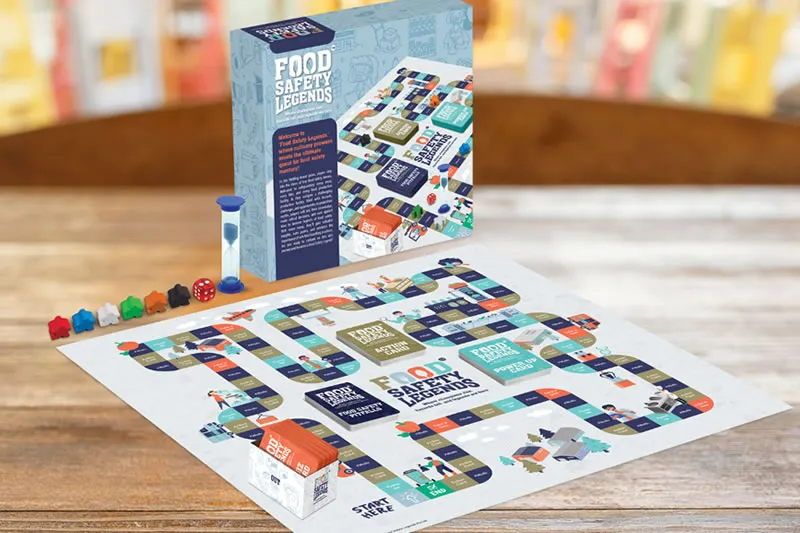
That's the gap Food Safety Legends is built for. It's a training add-on, used in conjunction with your accredited course, not instead of it, so the knowledge from the course is still there six months later, not just on the day of the exam.
Who needs a food handlers certificate, and who needs accredited training specifically
Under Regulation R638, every food handler needs appropriate instruction with evidence of competency an inspector can review. Your designated Person in Charge needs more: accredited food safety training specifically. In practice, most accredited providers issue a certificate for both, but the accreditation requirement is strictest for the Person in Charge role. Our food handler training guide covers who counts as a food handler and what "appropriate instruction" means in practice, and our Person in Charge training guide explains the accredited requirement in detail.
Choosing a course and provider
A few things worth checking before you book:
- Accreditation. Confirm the provider and course are accredited for the role you're training, this matters most for your Person in Charge.
- Format. In-person and accredited e-learning are both used in South Africa; e-learning suits distributed teams or shift workers who can't all attend on one day.
- Level. A general handler course is not the same as a HACCP or lead-auditor course, match the course to the role.
- Cost and duration. These vary by provider, format and level, compare a few directly rather than assuming one price fits every course.
The training add-on that runs between your courses
To be clear about what Food Safety Legends is and isn't: it's not accredited, it doesn't satisfy the R638 training requirement on its own, and it doesn't issue a certificate. It's a board game, built around real production scenarios, designed specifically to run in the gaps between accredited courses, refreshers, inductions, toolbox talks and pre-audit knowledge checks, so what the course covered stays practised, not just remembered. Used as an add-on alongside your course, it's the difference between a team that passed a food safety course once and a team that lives food safety on the floor every shift. See games built for employees or order the game.
Common questions
What is a food safety certificate?
In everyday use, a food safety certificate is the certificate of completion you get from an accredited food safety or food handler training course, proof that a specific person has completed specific training. It's a personal record, not a business licence.
Is a food safety certificate the same as a Certificate of Acceptability?
No, and this is the most common mix-up. A food safety certificate belongs to a person and shows they completed training. A Certificate of Acceptability (COA) belongs to the business, it's the municipal operating licence a food premises needs before it can legally trade, issued after an environmental health inspection. You can have trained, certificated staff and still not hold a valid COA, they cover different requirements.
How do I get a food safety certificate in South Africa?
By completing a food safety or food handler training course through an accredited provider, in person or via accredited e-learning. Your designated Person in Charge specifically needs accredited training under Regulation R638; other food handlers need appropriate instruction with evidence of competency, which most providers also issue as a certificate.
Do all food handlers need a certificate?
R638 requires every food handler to receive appropriate training with evidence of competency an inspector can review, whether that evidence is formatted as a formal certificate or documented training records depends on the provider and your own record-keeping. The Person in Charge is the one role where accredited training (and the certificate that comes with it) is explicitly required.
How much does a food safety course cost, and how long does it take?
It varies by provider, format and level, from a short half-day awareness session to multi-day accredited programmes. In-person and e-learning options both exist in South Africa. Compare a few accredited providers directly for current pricing and duration; what matters most is that the provider and course are properly accredited for the role you're training.
Does Food Safety Legends provide a food safety course or certificate?
No, and it isn't trying to. Food Safety Legends is a training add-on, not an accredited course, and it doesn't issue certificates. It's designed to be used in conjunction with your accredited course, not instead of it, reinforcing what the course covered through refreshers, inductions and toolbox talks so the knowledge stays current between courses.
Should training stop once you have a certificate?
No. A certificate proves training happened on a given date, it doesn't guarantee the knowledge is still front of mind weeks later, especially for frontline staff working under pressure. Most food safety programmes that hold up under audit pair the accredited course with ongoing reinforcement in between: toolbox talks, quizzes, a monthly refresher activity, so food safety stays top of mind, not just top of mind on training day.
Sources: Regulation R638 of 2018 (Foodstuffs, Cosmetics and Disinfectants Act 54 of 1972).
The add-on that keeps courses from fading
Order Food Safety Legends to run alongside your accredited course, not instead of it, and keep food safety top of mind between refresher cycles.