Culture Room Article
The Learning Benefits of Food Safety Legends in a Classroom Setting
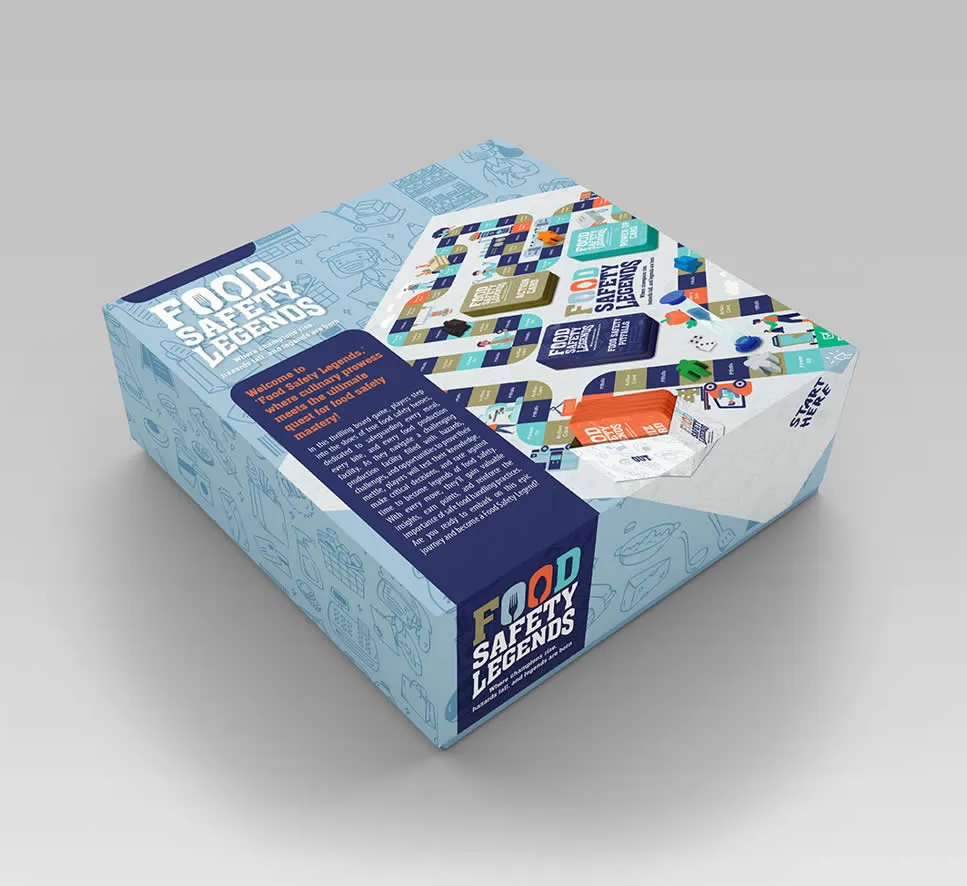
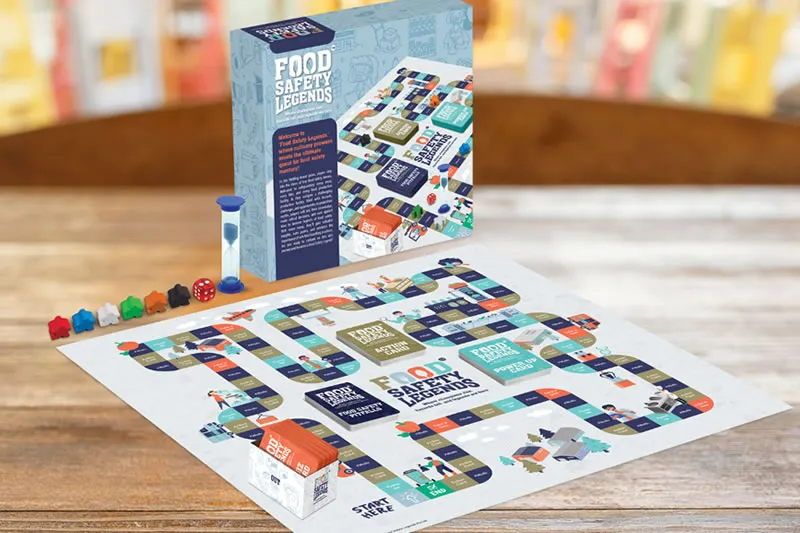
Food safety is often taught the same way it has always been taught: slides, a talk, a test. It works on paper, but retention is poor and engagement is worse. The Food Safety Legends board game was designed to change that. Here’s what it adds when you bring it into a classroom or training room.
1. Interactive learning
The board game format turns a passive lesson into an active one. Players aren’t listening, they’re making decisions, discussing scenarios and reacting to consequences. That active participation is what drives retention and genuine understanding of food safety concepts.
2. Practical application of knowledge
The game presents realistic food safety scenarios, so learners connect theory to the situations they actually face. Power-Up cards represent the correct corrective action for a specific Pitfall, which reinforces not just what the hazard is but what to do about it.
3. Collaborative learning
Played in groups, the game builds teamwork and communication as learners discuss and solve problems together. People also learn from each other’s perspectives and experience, peer learning that a lecture can’t replicate.
4. Immediate feedback and reinforcement
Quiz rounds give instant feedback and reinforce correct answers on the spot. Afterwards, the facilitator can address wrong answers so no misunderstanding leaves the room.
5. Motivation and engagement
The competitive element makes learning fun and keeps people participating. Small incentives, recognition, a “Food Safety Champion” title, a prize, push engagement further.
6. Holistic understanding
The game covers hazards, corrective actions and regulatory context together, giving a well-rounded picture. Placing food safety inside a game also shows learners why these concepts matter in real-life settings.
7. Behavioural change and awareness
By simulating real situations, the game helps people understand the impact of their actions on food safety. It raises awareness and encourages learners to take accountability for maintaining standards, the foundation of a strong food safety culture.
Tips for facilitators
- Structured sessions. Set clear learning objectives and run a debrief discussion afterwards to reinforce the key takeaways.
- Facilitated play. Have an instructor guide the game, highlight the teaching points and clear up misunderstandings as they come up.
- Supplementary materials. Add quizzes or discussion prompts to complement the game.
- Reflection and feedback. Ask learners what they took away and how they’ll apply it back on the floor.
Used this way, Food Safety Legends creates an engaging, effective learning environment that imparts essential food safety knowledge, and gets people to apply and retain it. See how to play or read more about using the game for food safety training.
Are you a trainer, consultant or college? See how training providers use Food Safety Legends.