Culture Room Article
8 Signs of a Weak Food Safety Culture (and How to Fix Each One)
A weak food safety culture usually doesn’t show up as a compliance failure, it shows up as small, everyday behaviours: shortcuts nobody mentions, near-misses nobody reports, rules that only get followed when someone’s watching. Here are eight concrete signs to look for, and what tends to actually fix each one.
This page is a diagnostic companion to our guide to building a food safety culture, read on if you want the diagnosis; head there for the “how to build it” answer.
1. Rules get followed only when someone’s checking
What it looks like: hygiene practices tighten up visibly before an audit or when a manager walks past, and relax the moment they’re not watching. What tends to fix it: less top-down enforcement, more genuine buy-in, culture-building activities that involve the whole team making the same decisions together, rather than rules being handed down.
2. Near-misses go unreported
What it looks like: a spill, a temperature excursion, or a close call happens and gets quietly cleaned up rather than flagged. What tends to fix it: making it clear, and demonstrating through actual response, not just policy, that reporting a near-miss is rewarded, not punished.
3. New starters learn habits from peers, not from training
What it looks like: what a new hire actually does within a month looks more like their trainer’s personal habits than what the induction covered. What tends to fix it: a standardised induction format everyone gets, not an informal “shadow someone experienced” approach (see our guide on training as your team grows).
4. Junior staff won’t speak up
What it looks like: a packer or new hire notices something wrong but doesn’t say anything to a supervisor or manager. What tends to fix it: sessions that deliberately level the hierarchy, where junior and senior staff make the same calls under the same rules, make it normal to disagree with or question a more senior colleague in a low-stakes setting first.
5. Refreshers feel like a formality
What it looks like: annual refresher training happens because it’s required, not because anyone expects it to change behaviour, attendance is logged, engagement isn’t. What tends to fix it: a format people actually want to take part in, rather than a repeat of the same lecture. This is one of the more common, and more fixable, signs, see our informal assessment guide for a way to check whether refreshers are actually landing.
6. Supervisors don’t visibly follow their own rules
What it looks like: staff are expected to follow hygiene and safety rules that supervisors themselves are seen skipping. What tends to fix it: visible leadership participation, supervisors and managers taking part in the same training and activities as frontline staff, not just enforcing them.
7. Corrective actions don’t actually get corrected
What it looks like: an issue gets flagged in an audit or internal check, gets logged, and then nothing changes before the next review. What tends to fix it: closing the loop visibly, someone owning the fix and confirming it happened, not just recording that it was noted.
8. Training and real production scenarios don’t match
What it looks like: training covers generic hygiene rules, but the specific hazards your team actually faces on your production line rarely come up. What tends to fix it: training built around your real scenarios, your actual products, your actual layout, your actual past incidents, rather than generic content.
Where Food Safety Legends fits
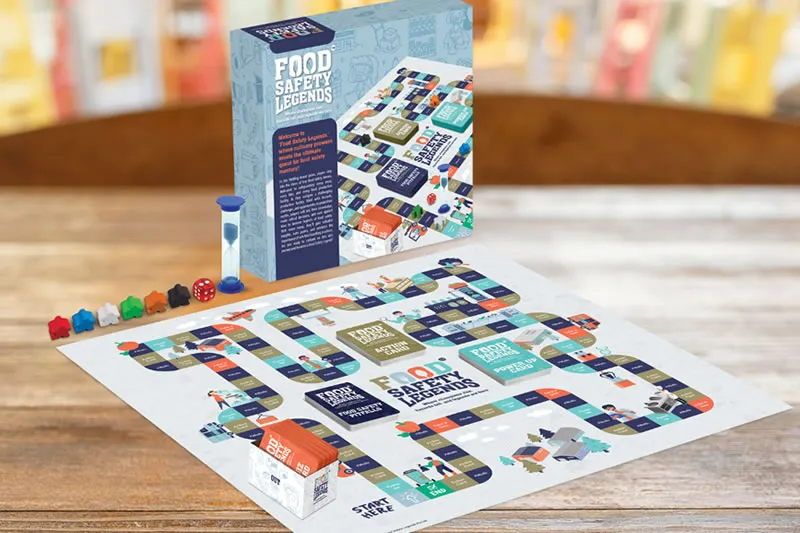
Several of these signs, rules only followed under observation, junior staff not speaking up, refreshers feeling like a formality, are specifically what a scenario-based, mixed-hierarchy game format is built to address. Food Safety Legends puts supervisors and frontline staff through the same real production decisions together, which is a direct, practical response to signs 1, 4, and 5 above. It’s a reinforcement tool for any food production space, not a substitute for the underlying culture-building work covered in our food safety culture guide.
Read about building food safety culture · order the game.
Sources: GFSI food safety culture framework; Regulation R638 of 2018.
Common questions
What's the difference between food safety compliance and food safety culture?
Compliance is what's documented and checked; culture is what people actually do when nobody's checking. You can be compliant on paper with a weak culture underneath.
How do I know if my food safety culture needs work?
Look for practical warning signs rather than relying on audit results alone, a clean audit can still sit on top of a culture where rules are only followed under observation.