Culture Room Article
Why Food Safety Training Is More Than a Compliance Box
In food production, retail and service, safety is not optional. It is a core part of delivering quality to customers and protecting your brand. Yet for many teams, food safety training becomes a once-a-year checkbox activity that fades fast from memory. It does not have to be that way.
At Food Safety Legends we believe training can be more than a dull requirement. It can be engaging, practical and even fun. Before we get to how, here are the fundamentals.
What is food safety training
Food safety training educates staff on the safe handling, preparation, storage and hygiene practices that prevent contamination and keep you compliant with local food safety regulations (R638 in South Africa, HACCP-based systems globally). It typically covers:
- Personal hygiene and protective equipment use
- Cross-contamination prevention
- Cleaning and sanitisation
- Correct food storage temperatures
- Pest control awareness
- Foodborne illness prevention
Why it matters
Without proper training, customers can get sick, trust and revenue follow, and a facility can be fined or closed during an audit. Employees may cause contamination without ever realising it.
With the right knowledge, teams work with more confidence and pride, food quality and safety improve, and the business earns a reputation for the kind of reliability that wins contracts.
What South African law expects
Regulation R638 (Regulations Governing General Hygiene Requirements for Food Premises) requires the person in charge and every food handler to be adequately trained in food safety and hygiene appropriate to their work. It does not prescribe a set refresher interval, which is why a strong programme pairs annual accredited training with year-round reinforcement. Our food handler training in South Africa guide breaks down what “adequately trained” means in practice.
The problem with traditional training
Many traditional courses are repetitive, expensive to renew every year, and quickly forgotten after the session. They rarely stick with frontline staff working under pressure on the line or in the kitchen. That is why food businesses are looking for more engaging refresher training options.
Training that sticks
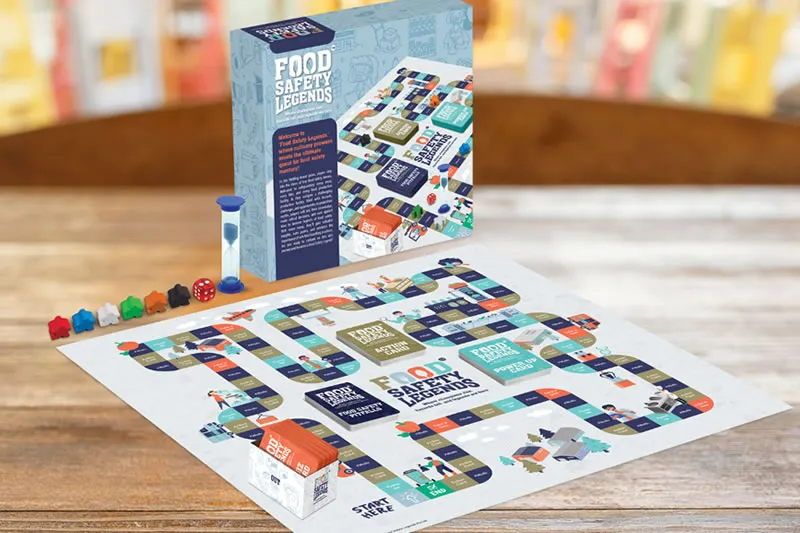
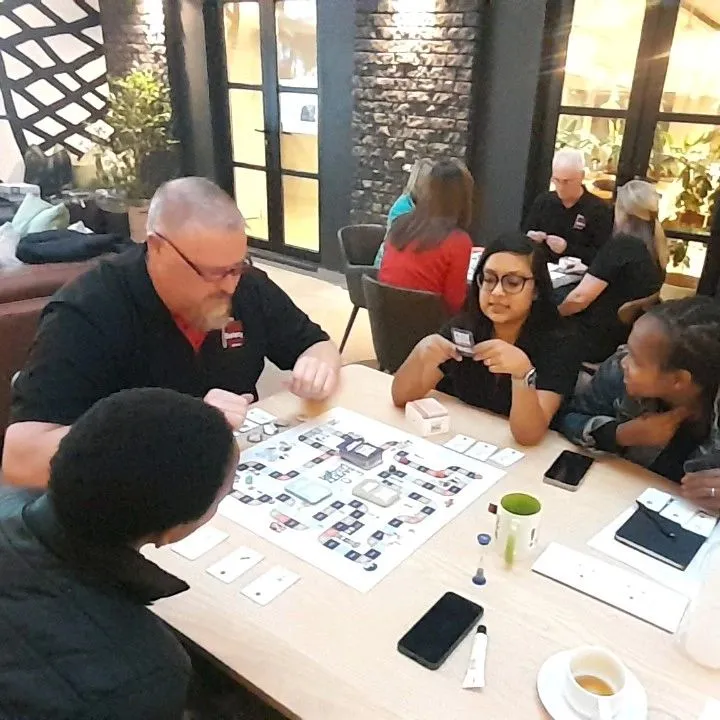
Food Safety Legends is a board game built to train teams through play. It is repeatable, built around real food safety scenarios, and designed for the way people actually remember things:
- Employees recall what they covered because they made decisions, not just listened
- It drives team discussion and shared accountability, the basis of a strong food safety culture
- It fits toolbox talks, audit prep, inductions and monthly refreshers
For seven ready-to-run formats, see games to play with your food safety team.
In short
Food safety training is about more than compliance. It protects people, businesses and reputations, and the better your team understands it, the better your outcomes. If you are ready to make training something your team remembers, order Food Safety Legends or read more about food safety training that sticks.
Common questions
Why is food safety training important?
Untrained handlers cause contamination, failed audits and foodborne illness, each of which costs money and trust. Trained teams work with more confidence, keep quality higher, and give the business a reputation auditors and customers rely on. Training is the single cheapest control you have against a recall.
What does food safety training need to cover?
Personal hygiene and protective equipment, cross-contamination prevention, cleaning and sanitisation, correct storage temperatures, pest control awareness, and foodborne illness prevention, all mapped to the hazards of your own site.
What does South African law require for food safety training?
Regulation R638 requires the person in charge and all food handlers to be adequately trained in food safety and hygiene for the work they do. It does not set a fixed refresher interval, so most food businesses run at least an annual refresher plus ongoing reinforcement. See our food handler training in South Africa guide for the detail.
How often should food safety refresher training happen?
At least once a year for formal training, backed by shorter, more frequent reinforcement, toolbox talks, quizzes or a game, every month or two. Little and often beats one long session that is forgotten by the next week.